
Institutional best practices are the strategies, policies, and procedures that are recognized as being effective in achieving the goals and objectives of an organization. Institutional best practices help the organization to achieve its mission and vision effectively and efficiently. They help to ensure consistency, enhance efficiency, improve quality, promote innovation, and ensure compliance with legal and regulatory requirements. By implementing institutional best practices, a dental college can provide a high-quality educational experience to its students while contributing to the welfare of society.
- Community-Oriented Comprehensive Dental Care Model: Integrated Preventive–Curative–Rehabilitative Approach with Outreach and Prosthetic Rehabilitation
Objectives of the Practice
To deliver equitable, accessible, and comprehensive oral healthcare to underserved populationsTo implement preventive, interceptive, and rehabilitative strategies in oral healthTo integrate clinical training with community service, enhancing student competence and empathyTo reduce oral disease burden through structured prevention programsTo provide free prosthetic rehabilitation (single-day dentures) to selected patients annually
The Context
Access to oral healthcare remains limited among vulnerable populations such as homeless individuals, residents of rehabilitation centers, and school children from rural and semi-urban areas. Financial constraints, lack of awareness, and accessibility issues further aggravate oral health disparities.
To bridge this gap, the institution has developed a community-oriented model by collaborating with rehabilitation centers and schools. This initiative integrates outreach activities with institutional clinical services to ensure continuity of care, emphasizing preventive, curative, and rehabilitative aspects.
The Practice
The institution has implemented a structured and integrated dental care model comprising:
1. Preventive Care
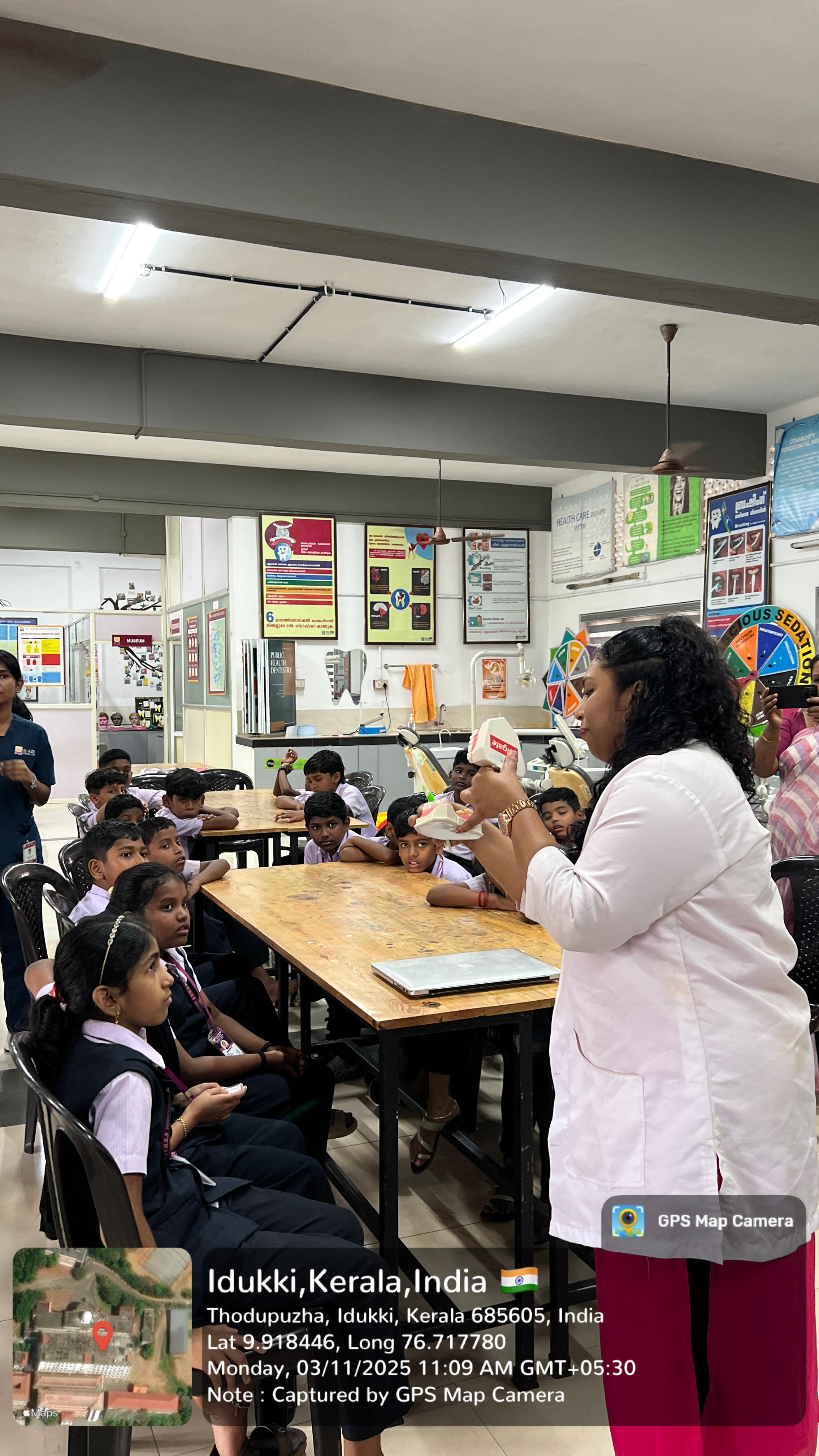
Oral health awareness programs
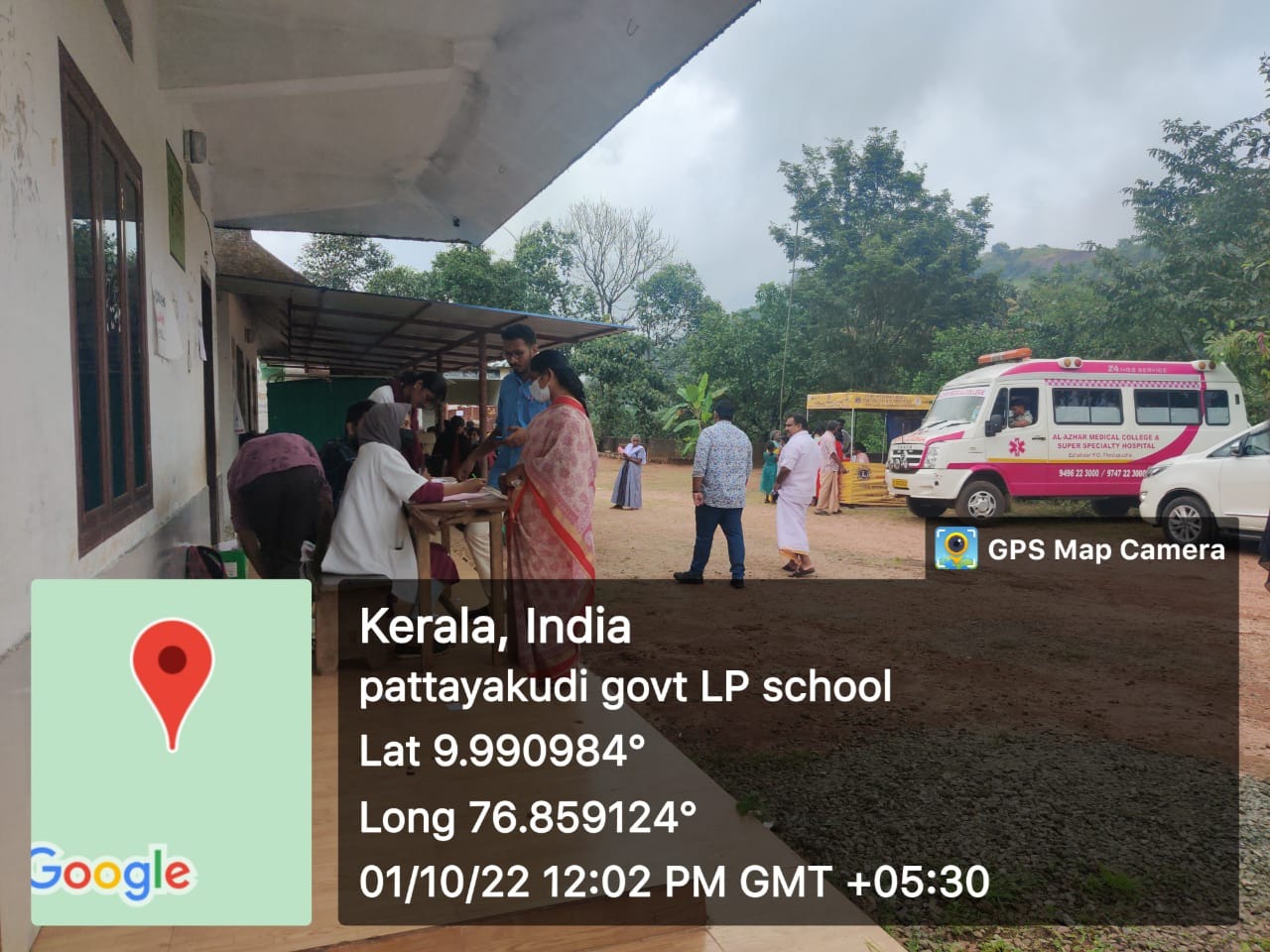
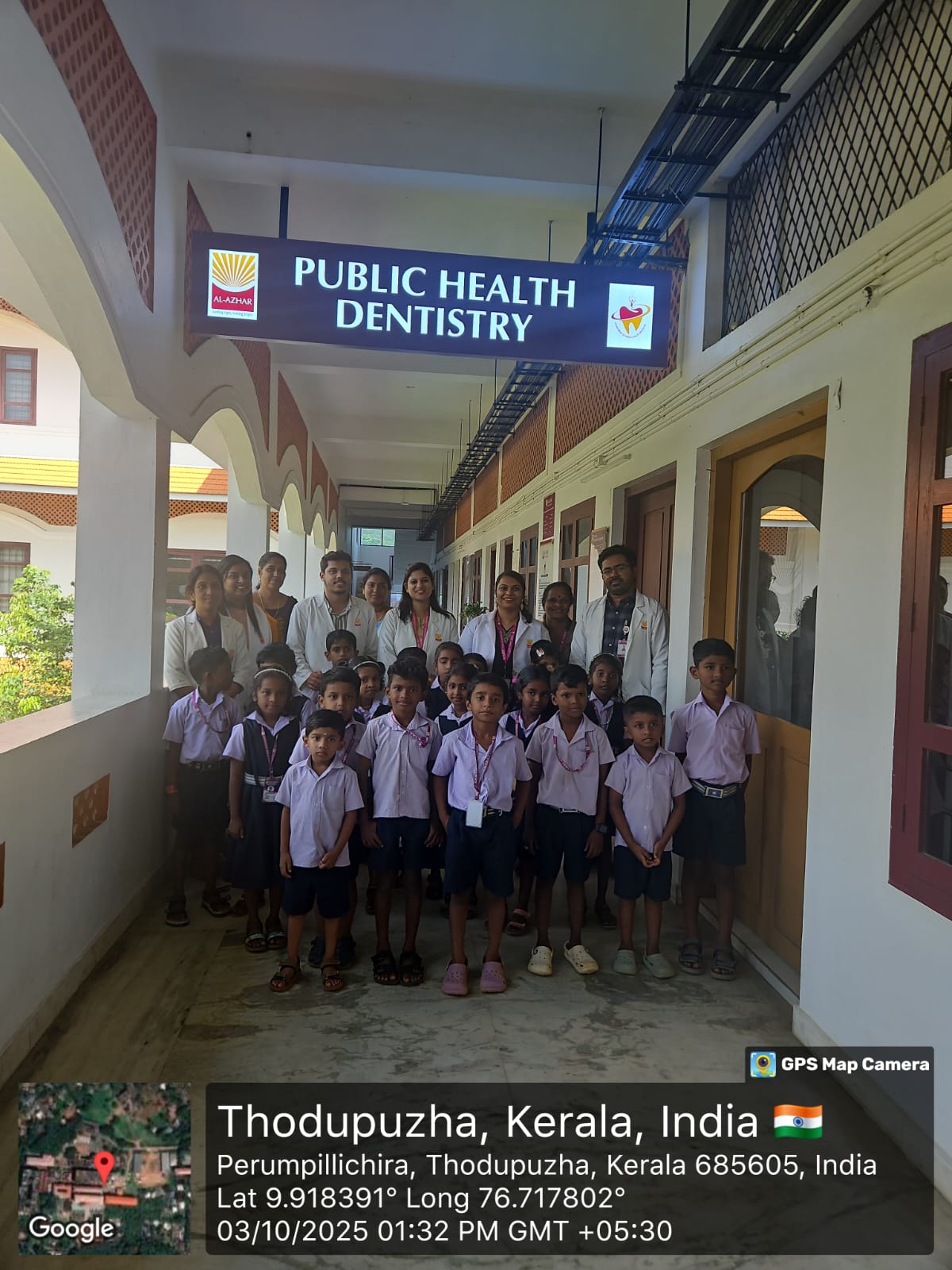
School dental screening camps
Oral hygiene instructions and preventive interventions
2. Curative Care
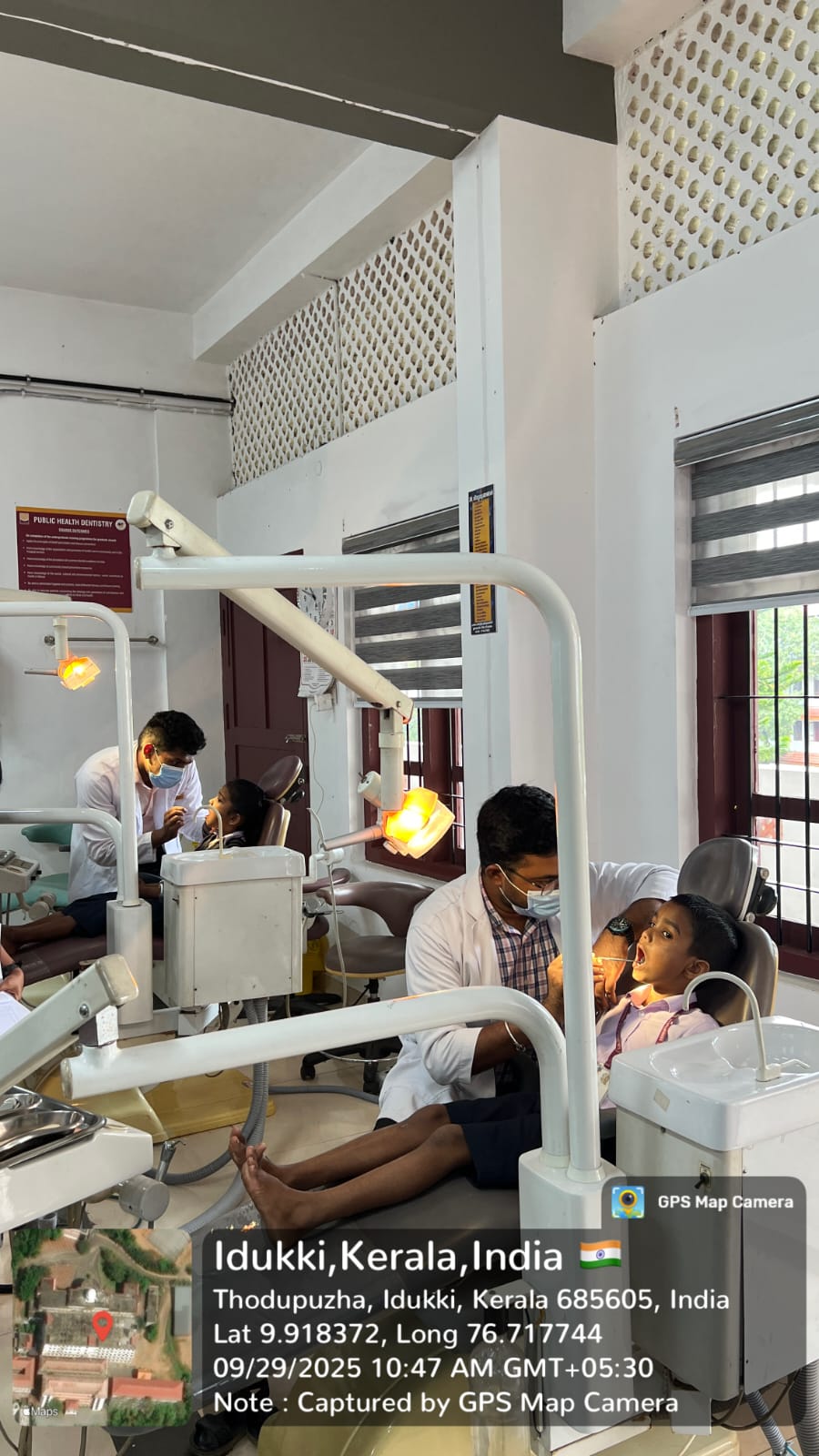
Diagnosis and treatment of dental diseases
Basic and advanced dental procedures provided at the institution
Referral system for specialized care
3. Rehabilitative Care
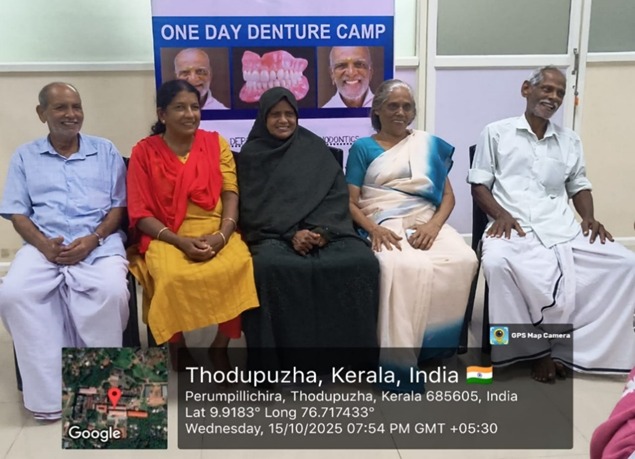
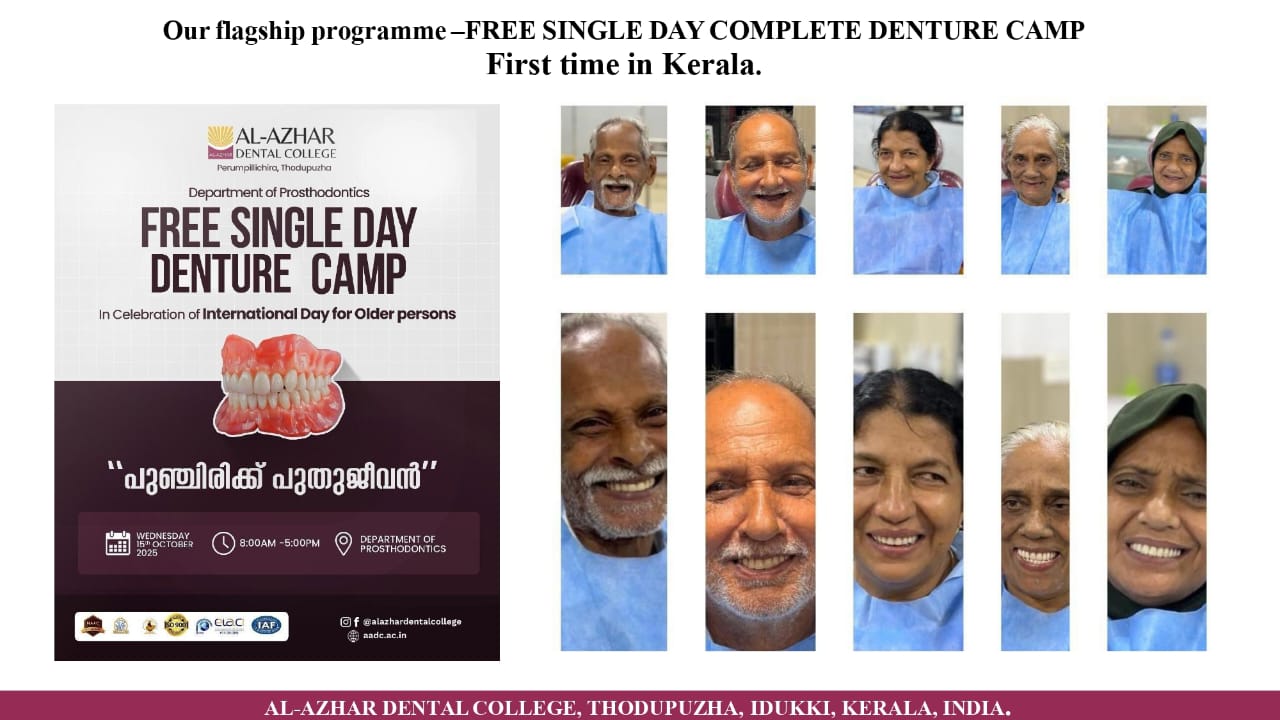
Prosthetic rehabilitation, including dentures
Special initiative: Free Single-Day Denture Program for selected patients
4. Community Outreach
Regular visits to rehabilitation centers and schools
Transportation support for patients to access institutional facilities
Continuous follow-up and monitoring
5. Academic Integration
Active involvement of undergraduate and postgraduate students
Hands-on training in community-based dental care
Development of empathy, communication skills, and clinical competence
BEST PRACTICE
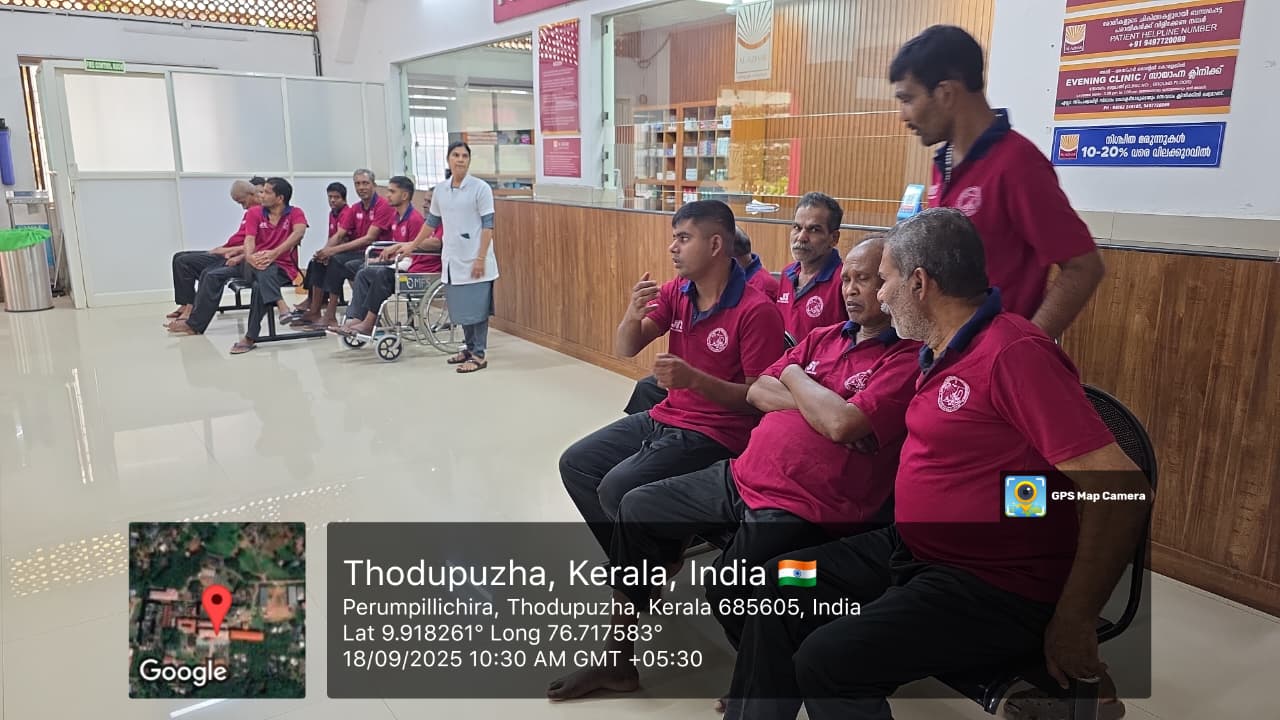
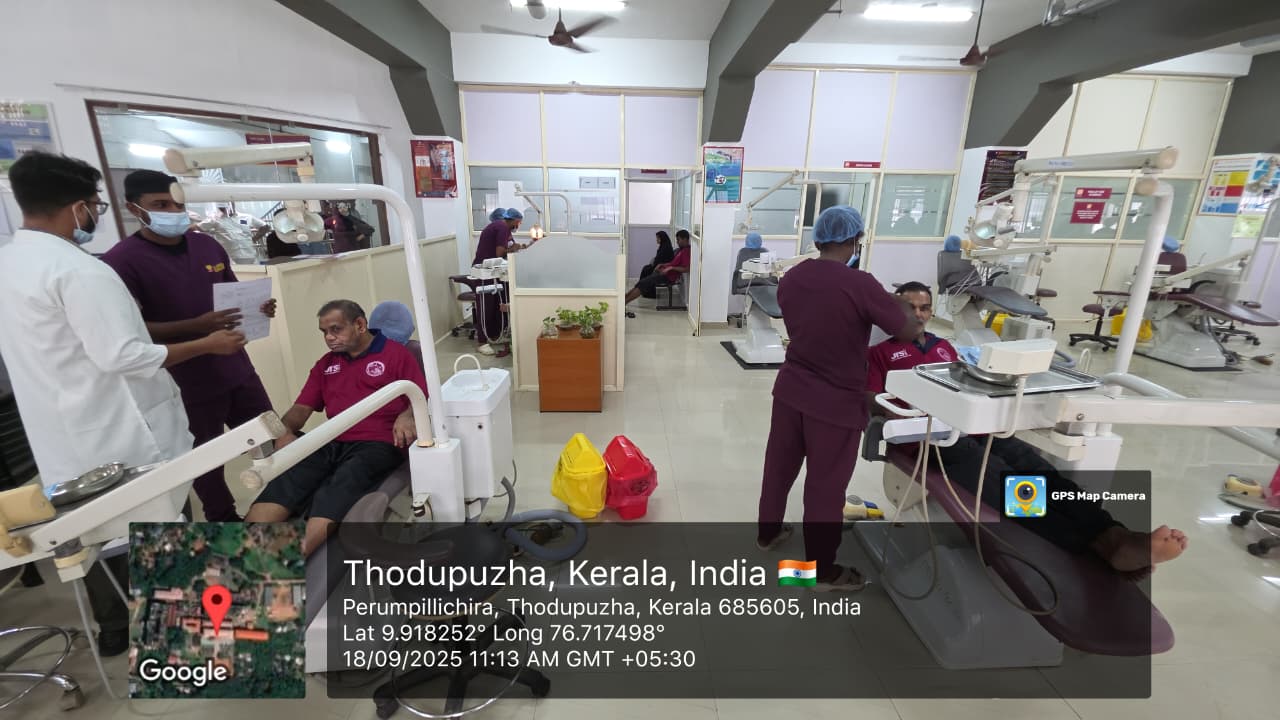
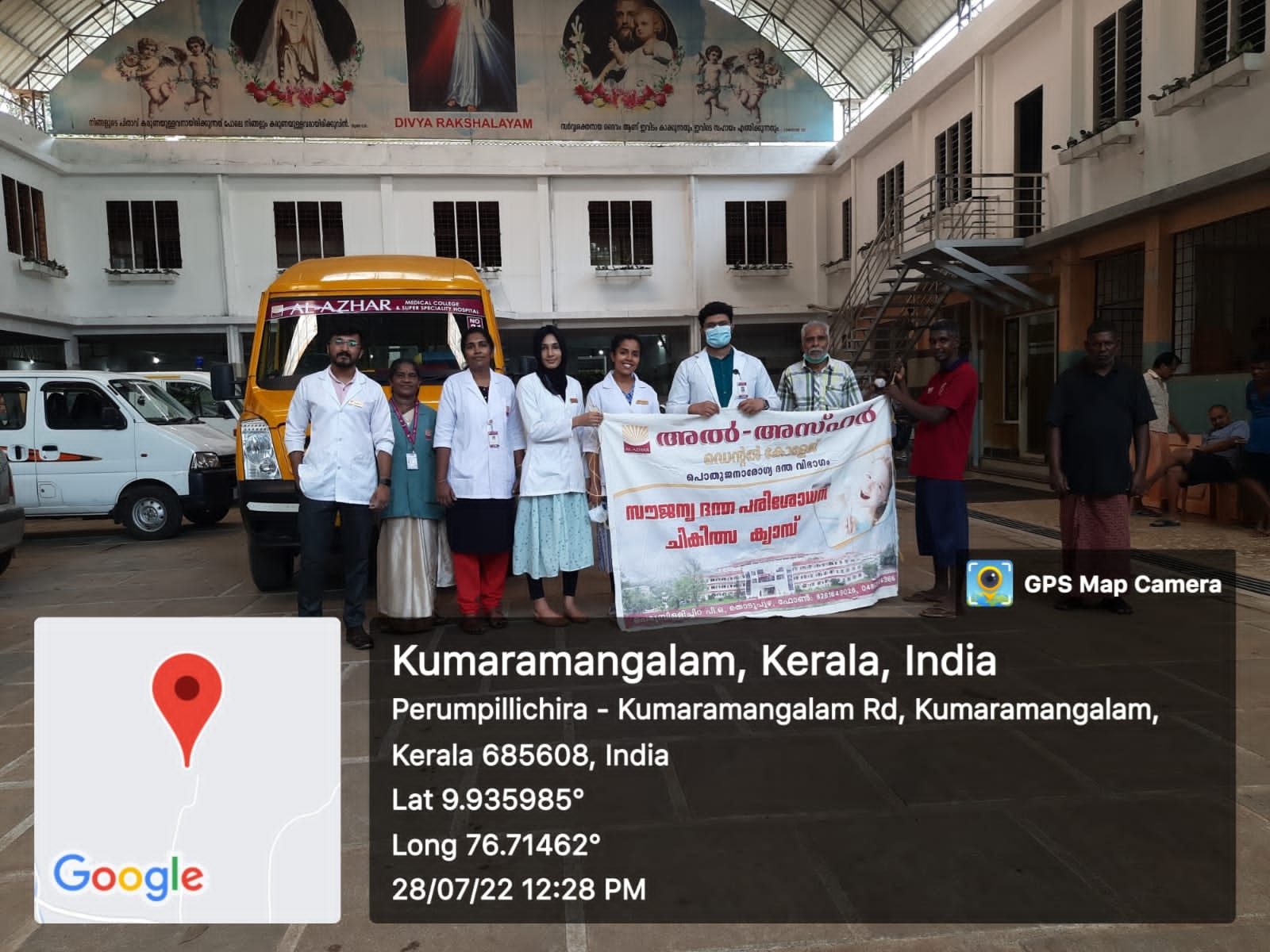
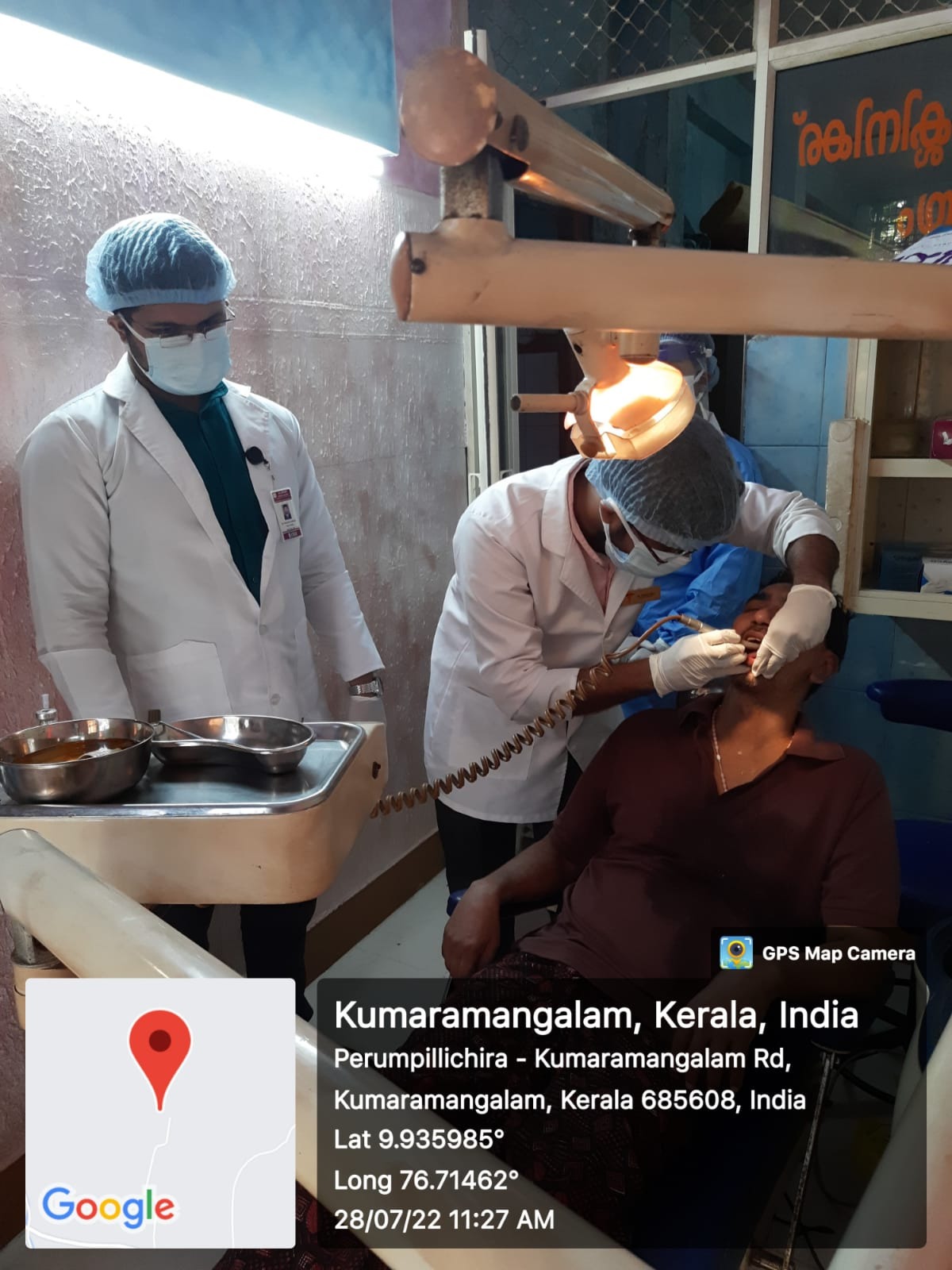
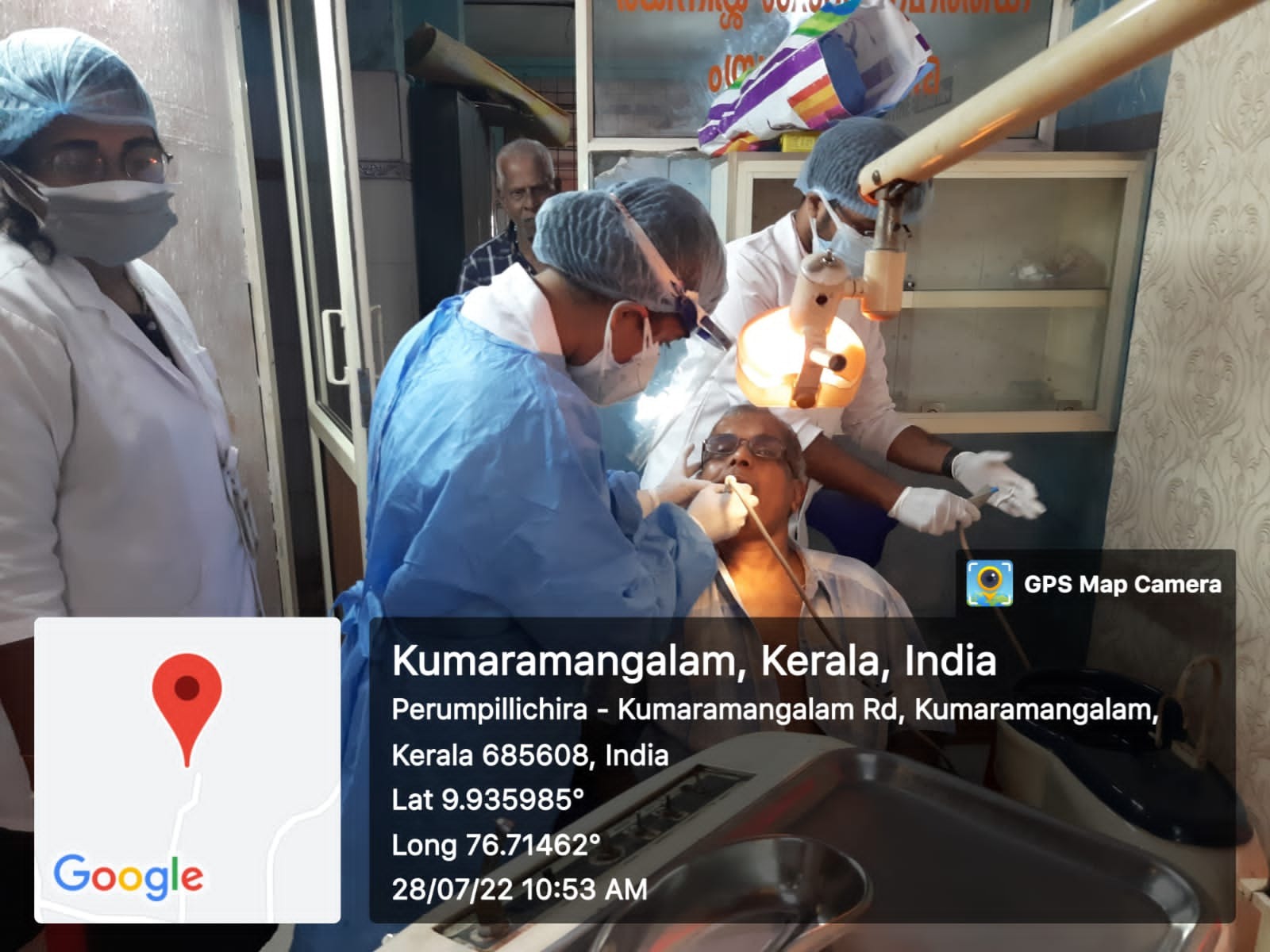
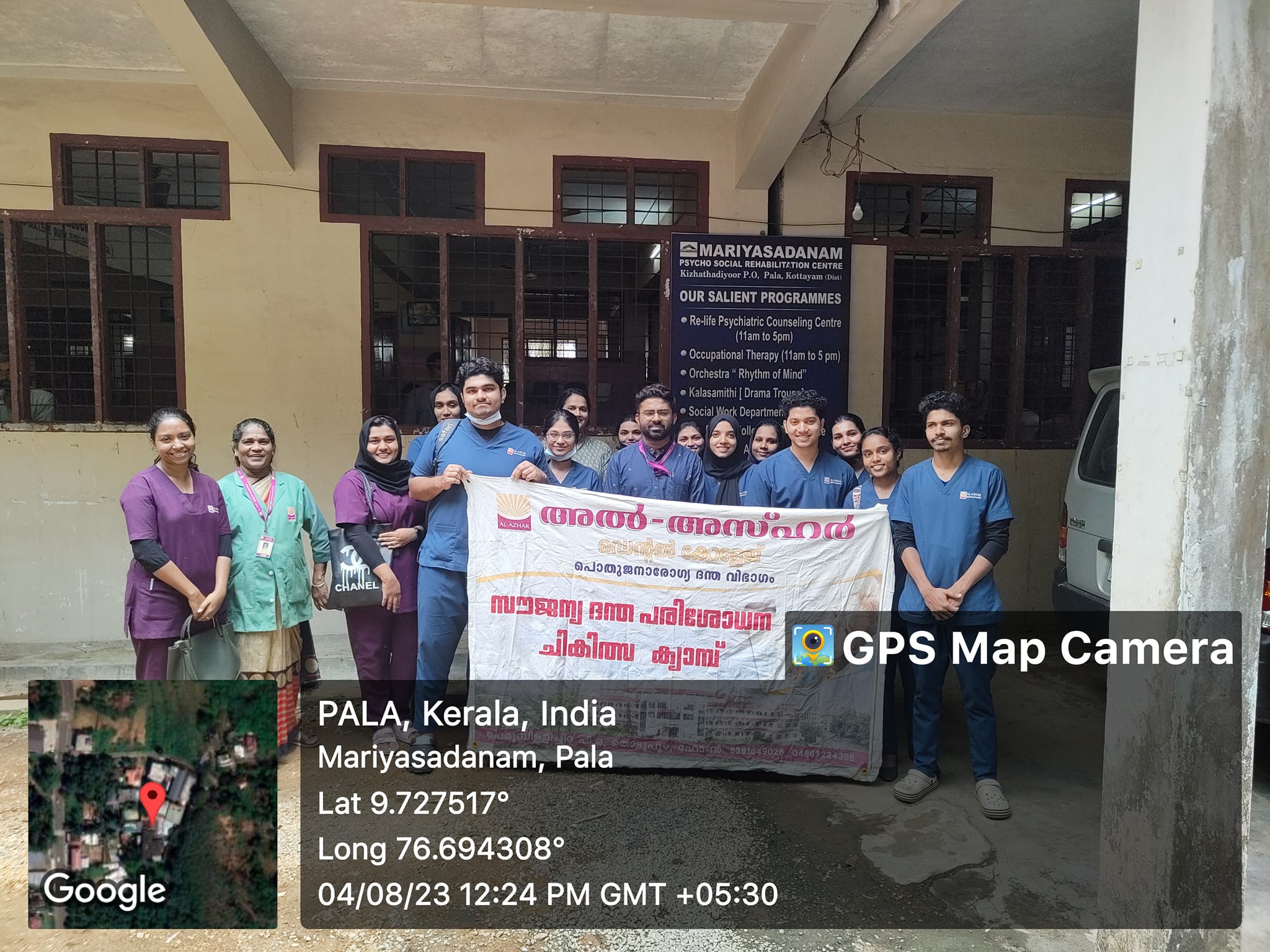
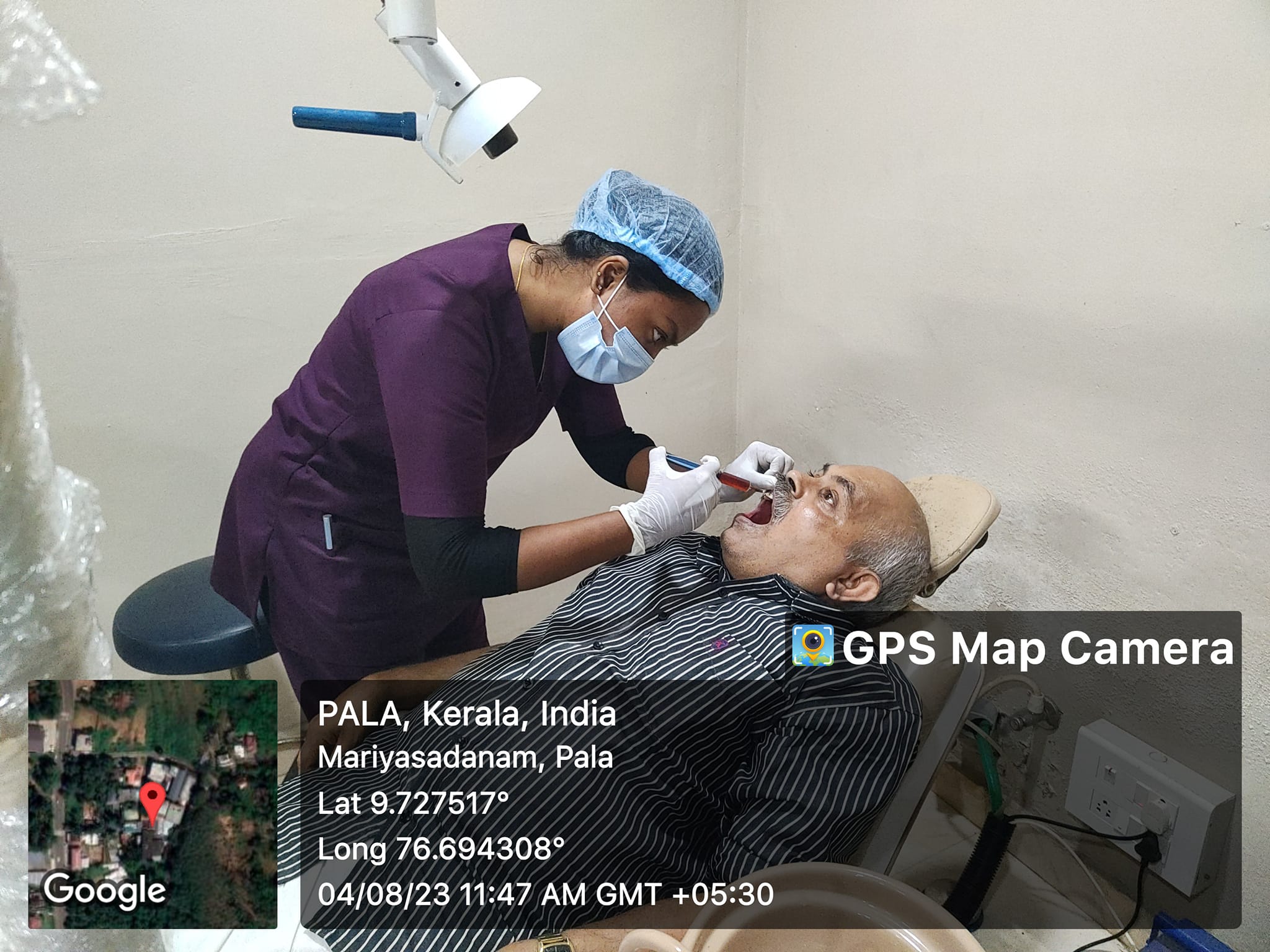
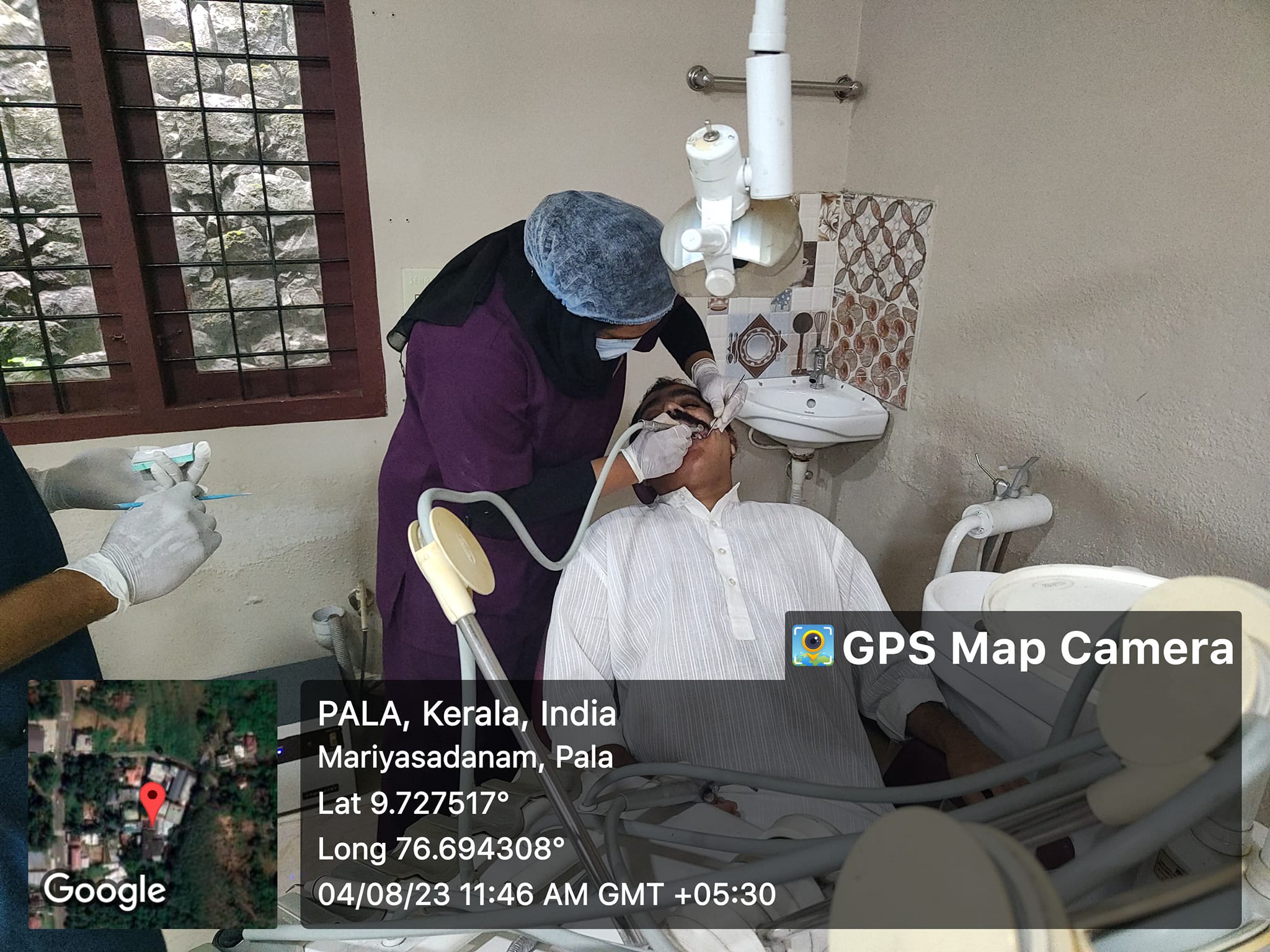
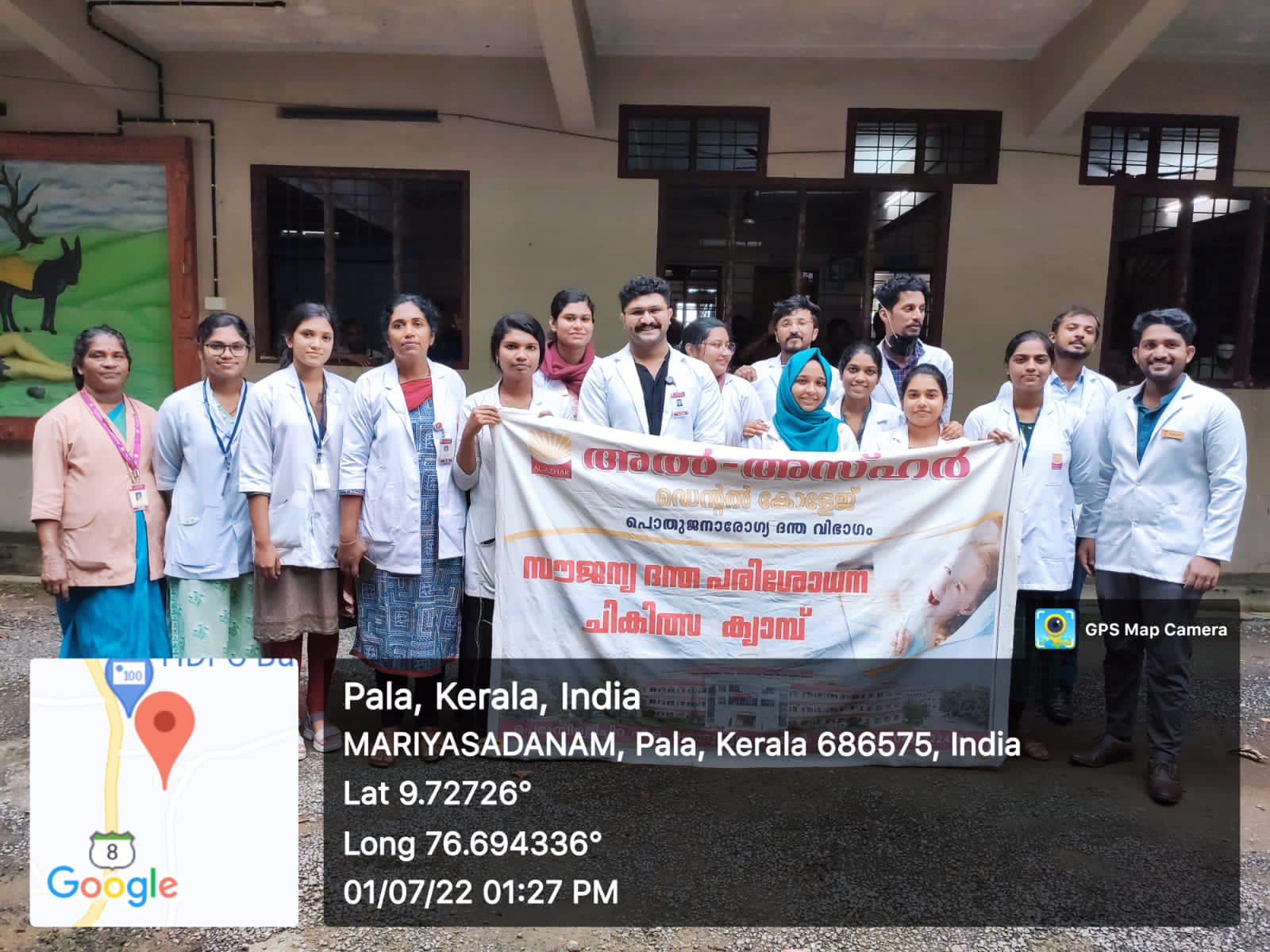
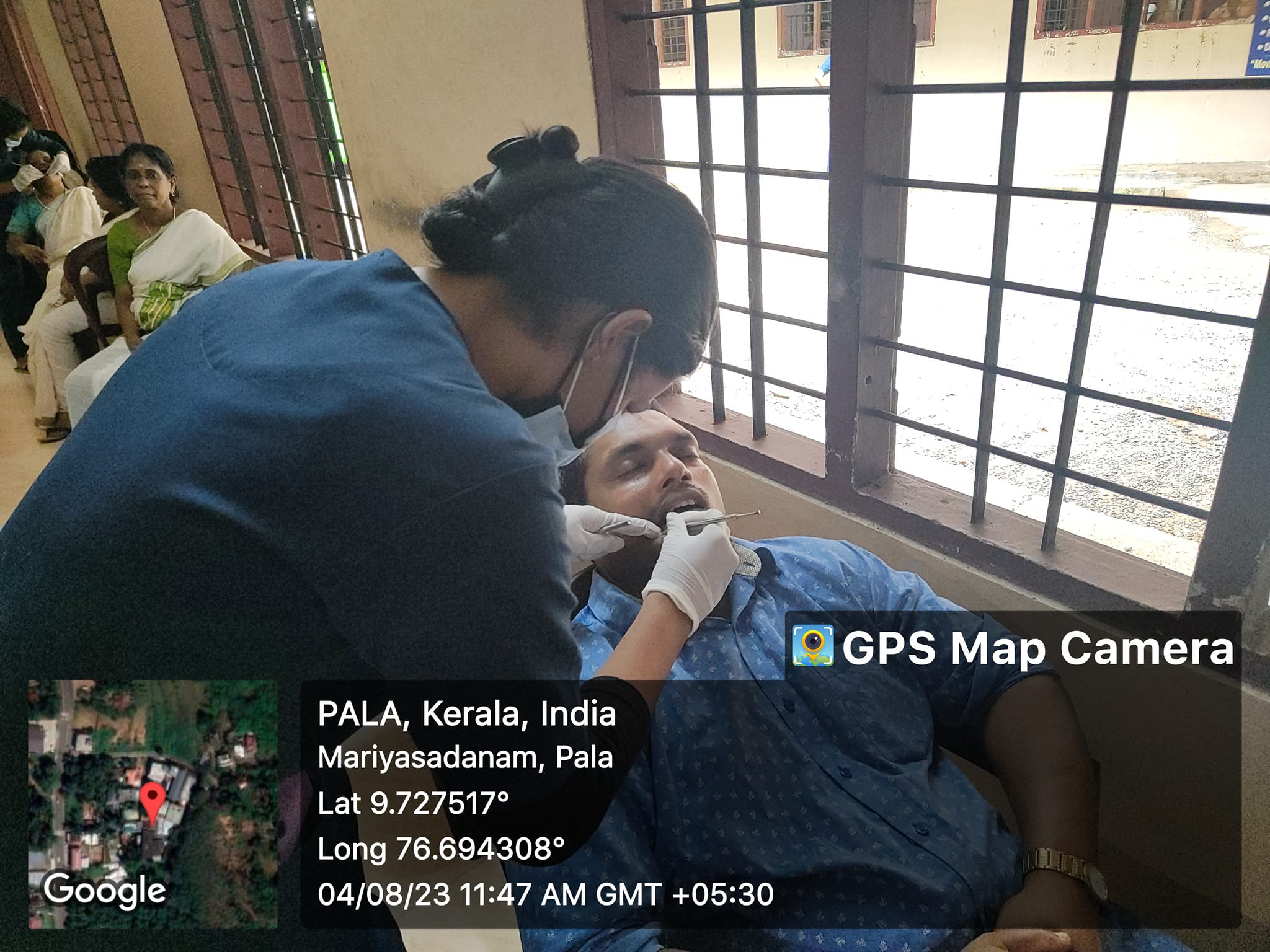
COMPASSIONATE DENTISTRY: PALLIATIVE ORAL HEALTHCARE OUTREACH PROGRAMME
Al Azhar Dental College has launched an initiative to provide oral health services to inmates in Mariyasadanam, Pala, and Divyarakshalayam, Kumaramangalam. The initiative is a significant step towards bridging the gap in oral health care for individuals in institutionalized settings. The aim of the initiative is not only to provide oral health care services to inmates but also to develop the social commitment of dental students towards society.
BEST PRACTICE
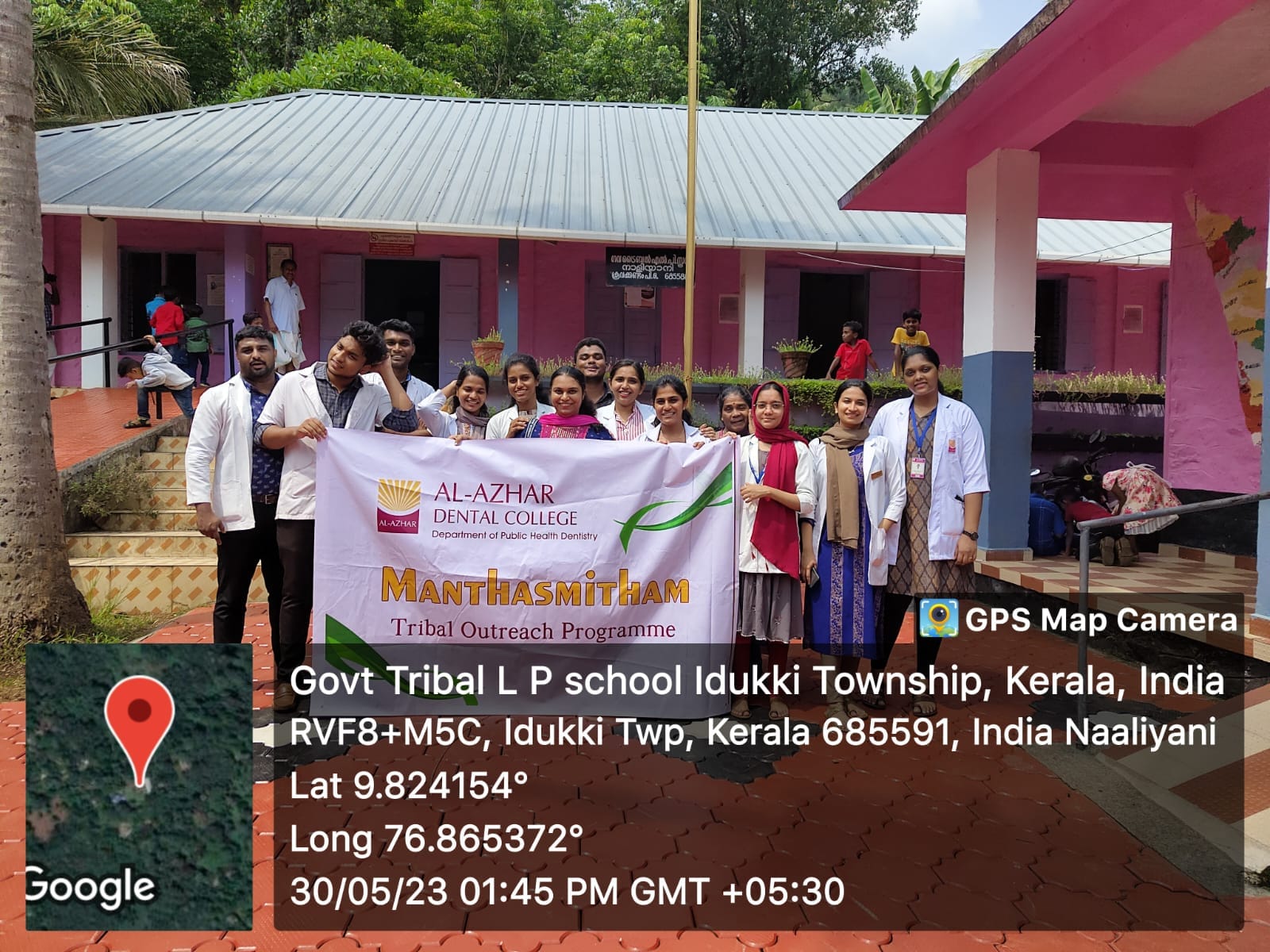
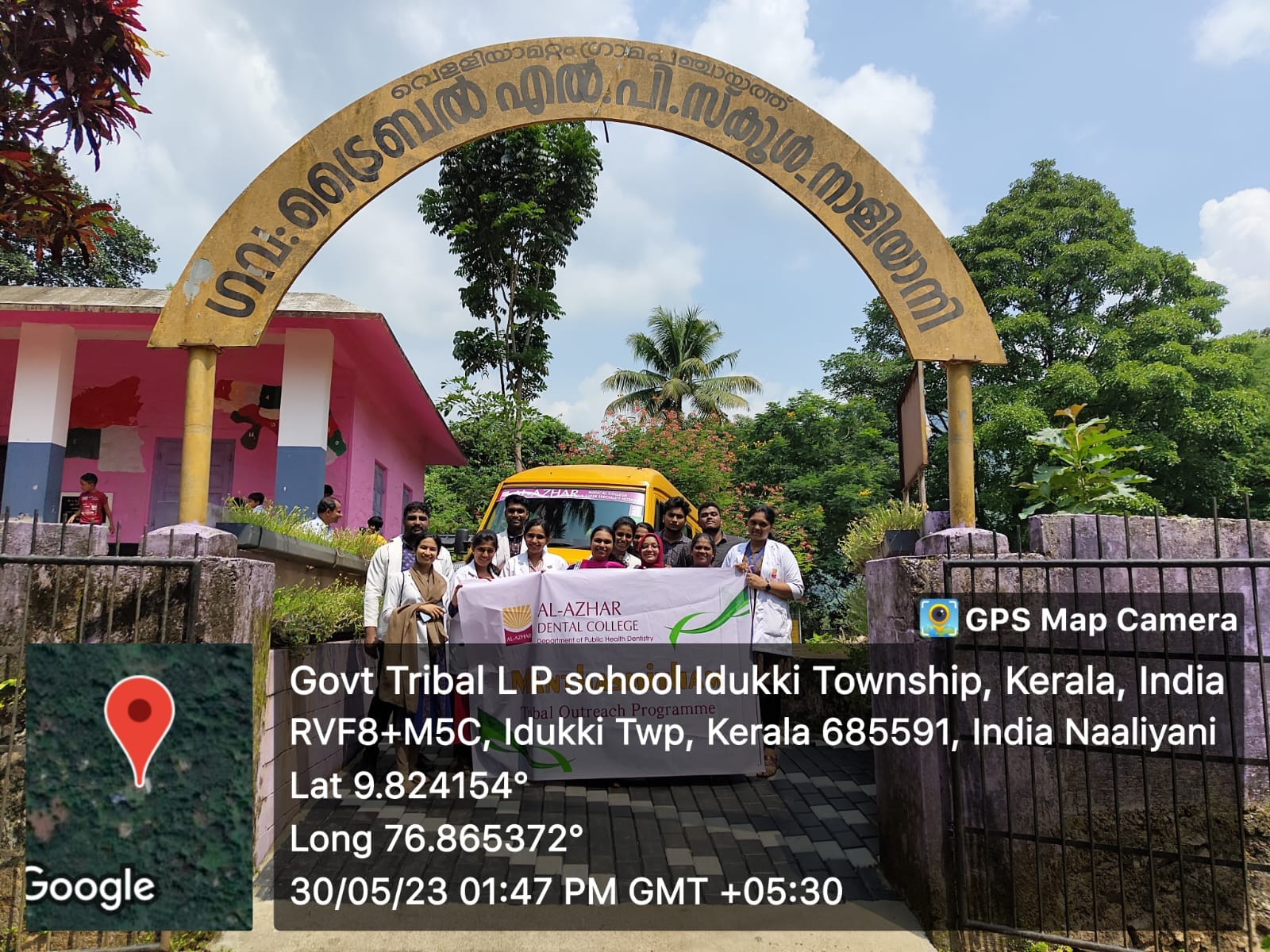
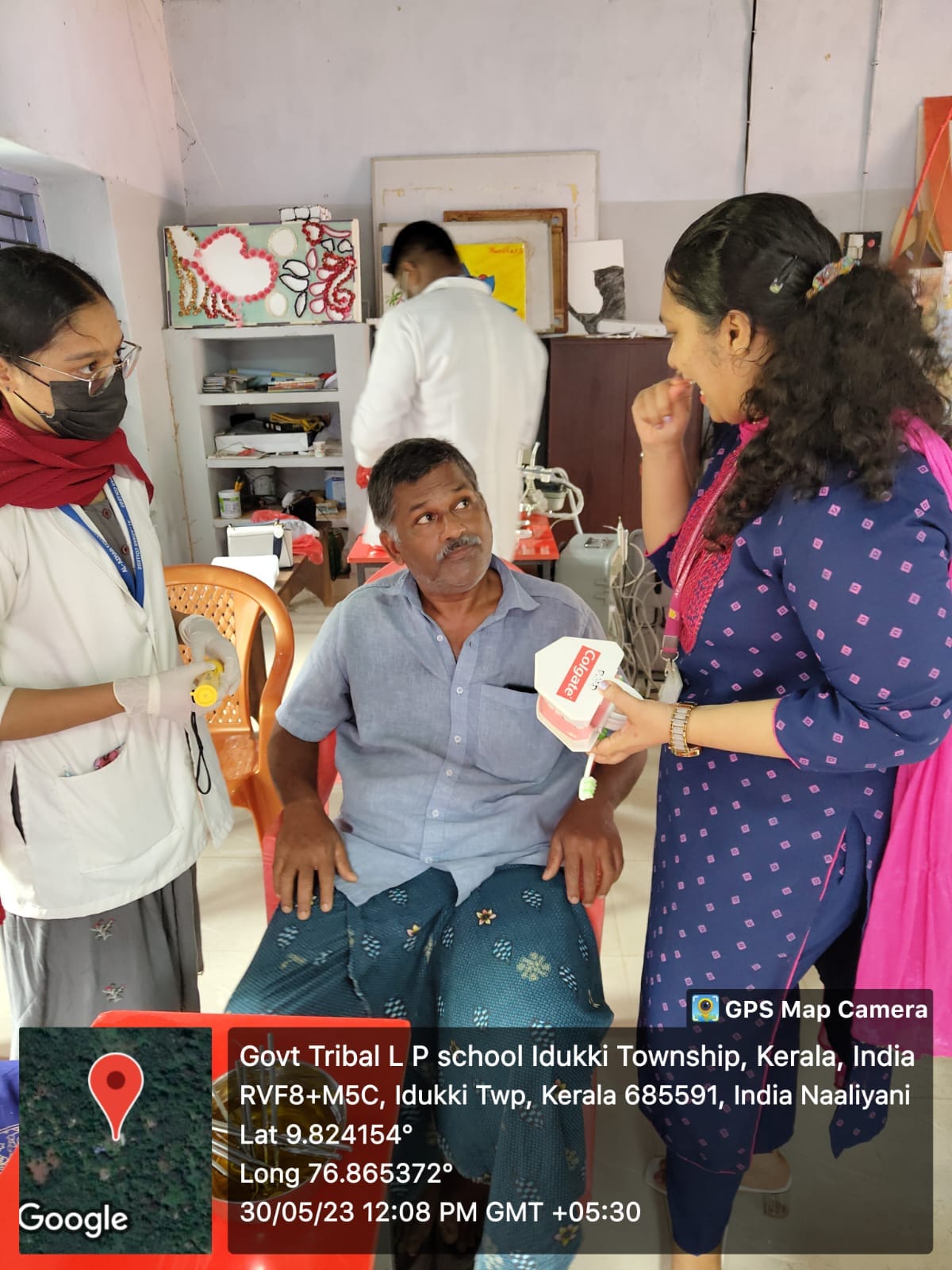
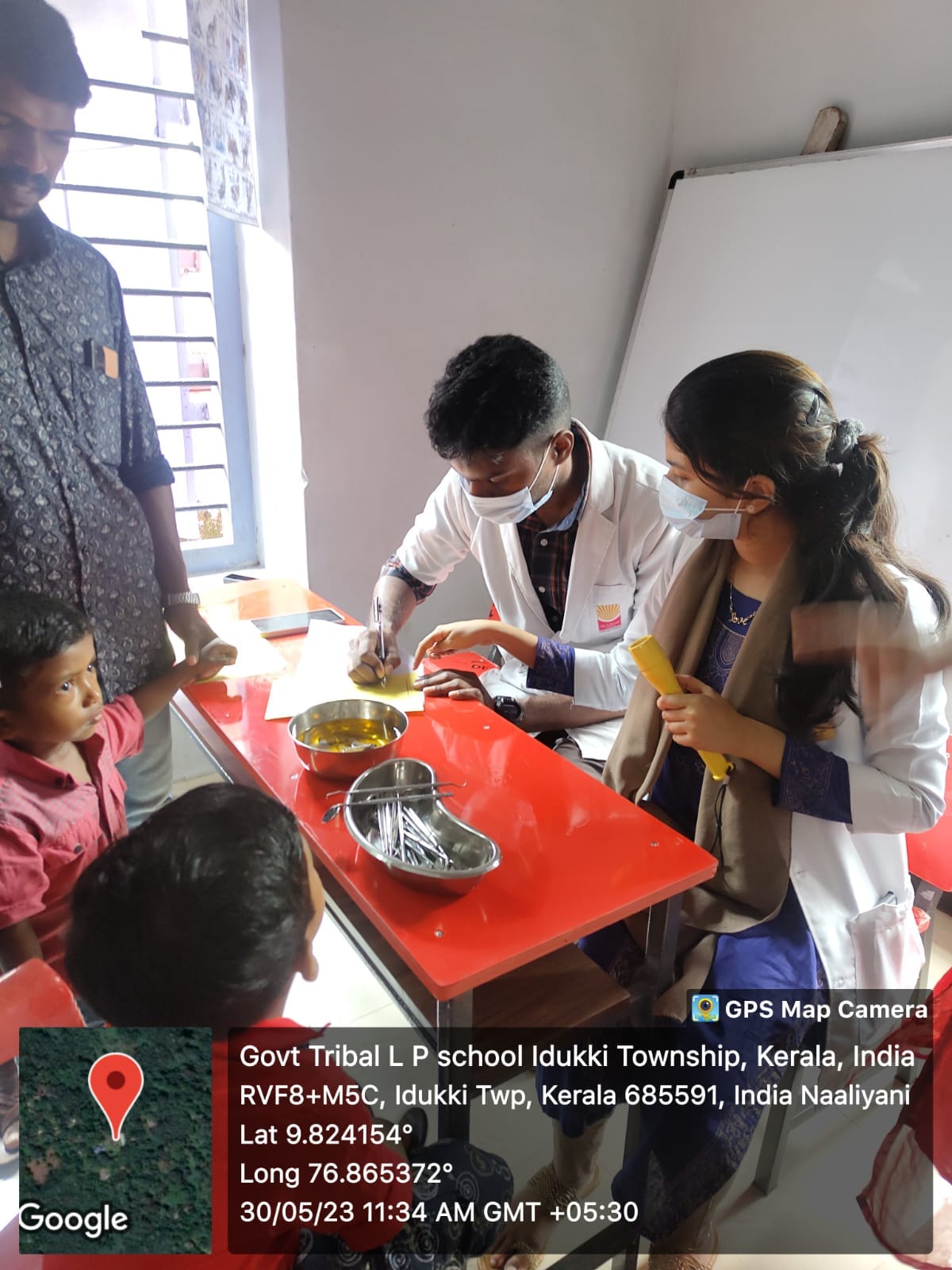
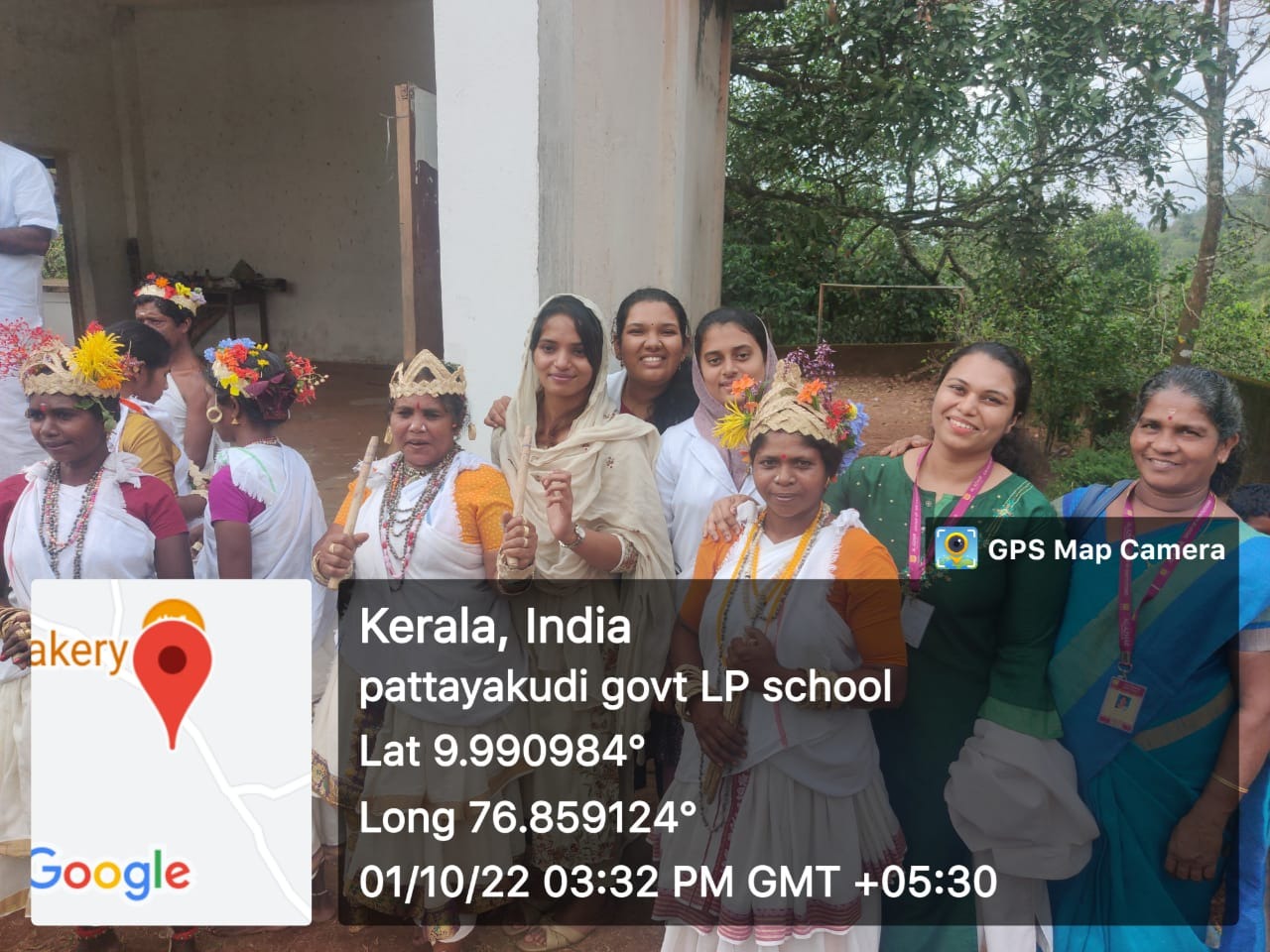
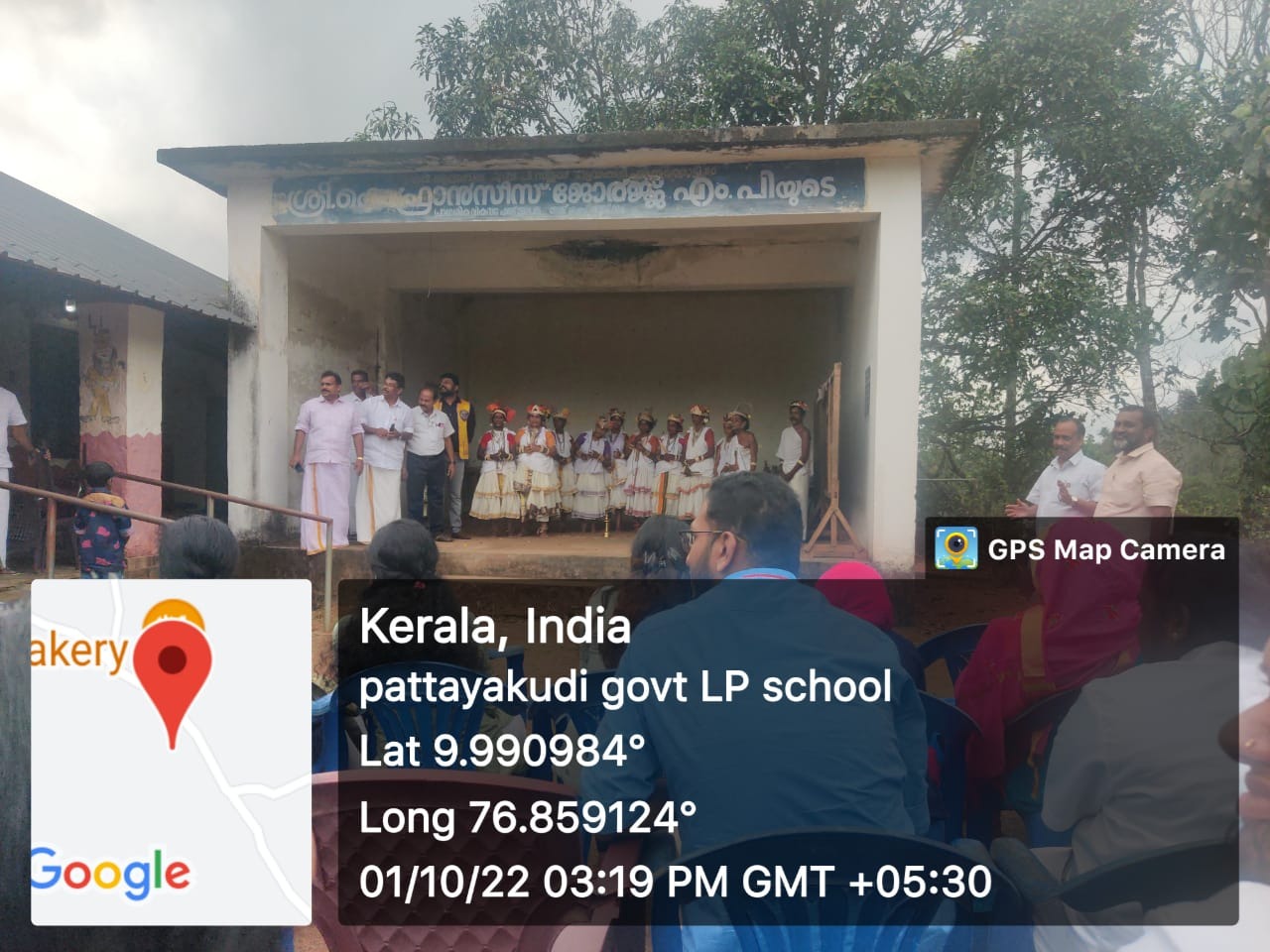
EMPOWERING SMILES: BRIDGING ORAL HEALTH DISPARITIES THROUGH TRIBAL OUTREACH
Al-Azhar Dental College, as the sole dental institution in the entire Idukki district, has undertaken significant initiatives to conduct outreach programs. The college is committed to its mission and vision, emphasizing social responsibility. Many tribal and scheduled caste communities reside in various locations across the district. These marginalized groups face lower literacy rates compared to the state average in Kerala. Providing oral health awareness to them is of utmost importance, as these communities not only suffer from economic backwardness but also adhere strictly to their cultural norms and beliefs.